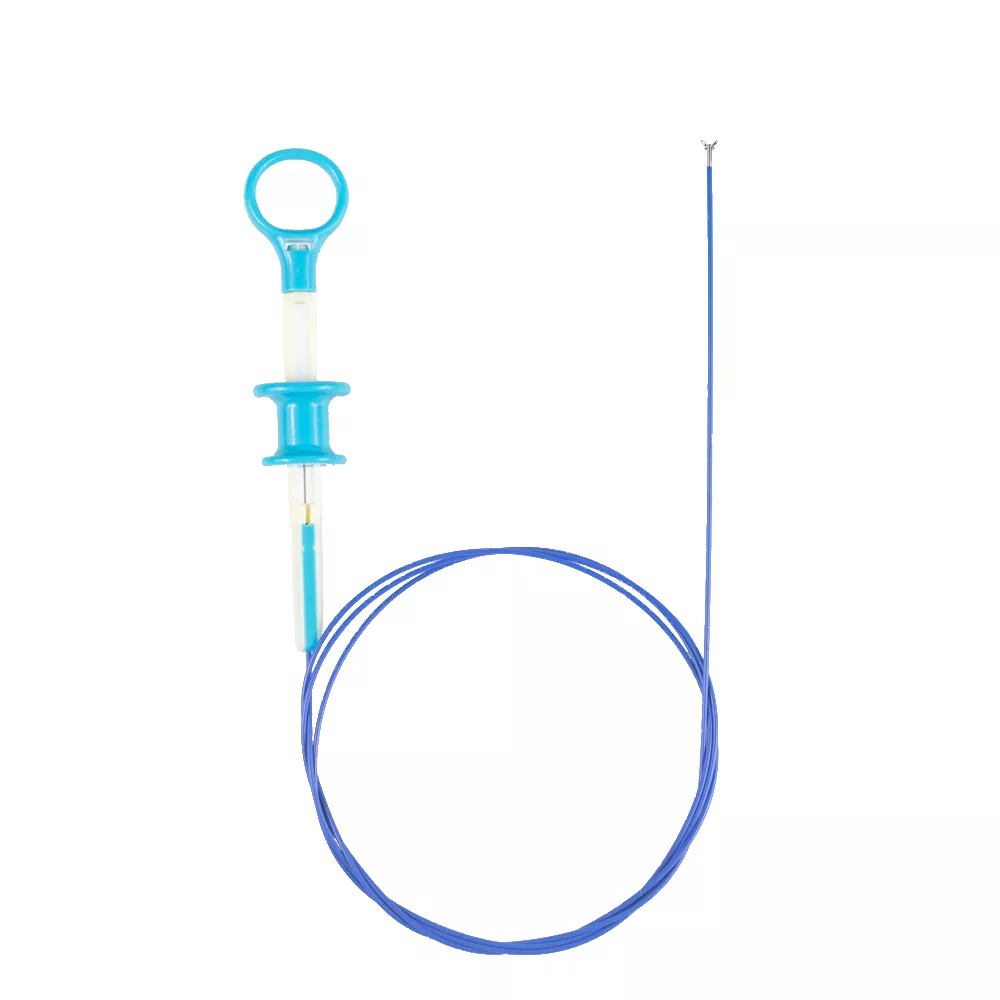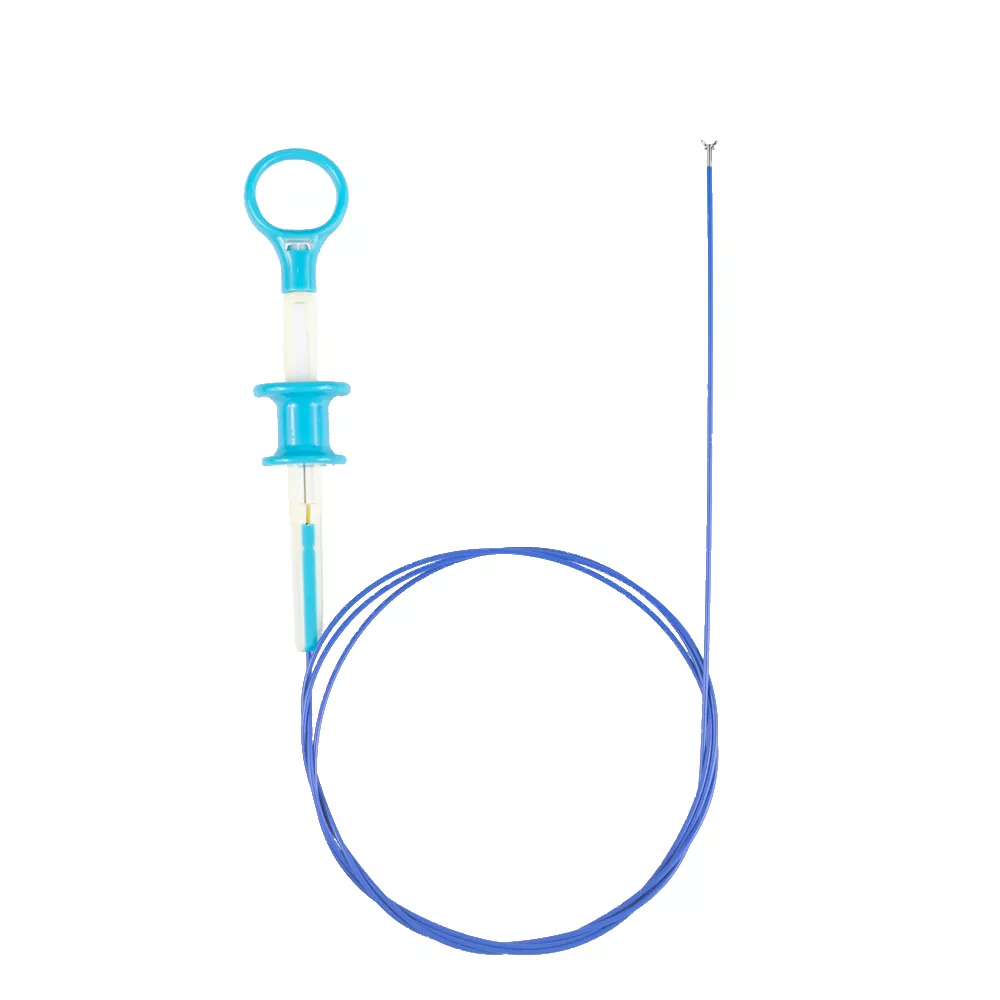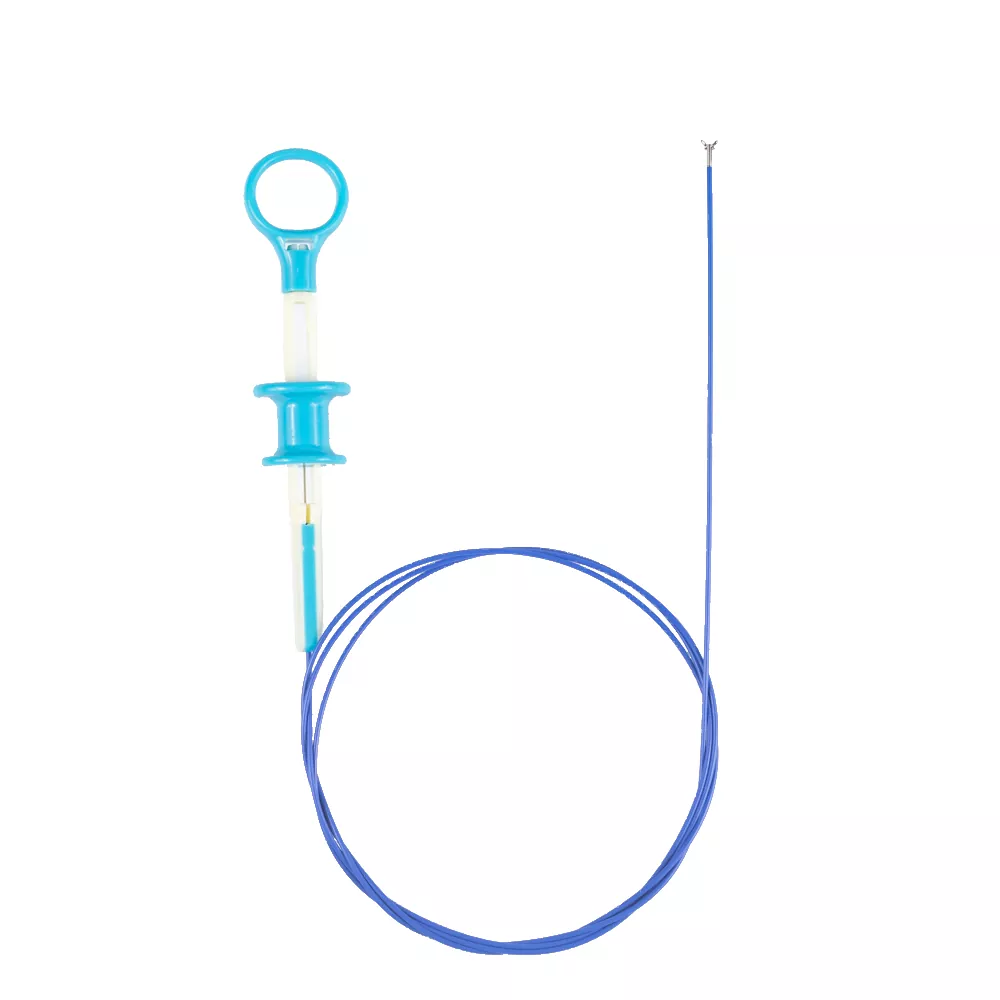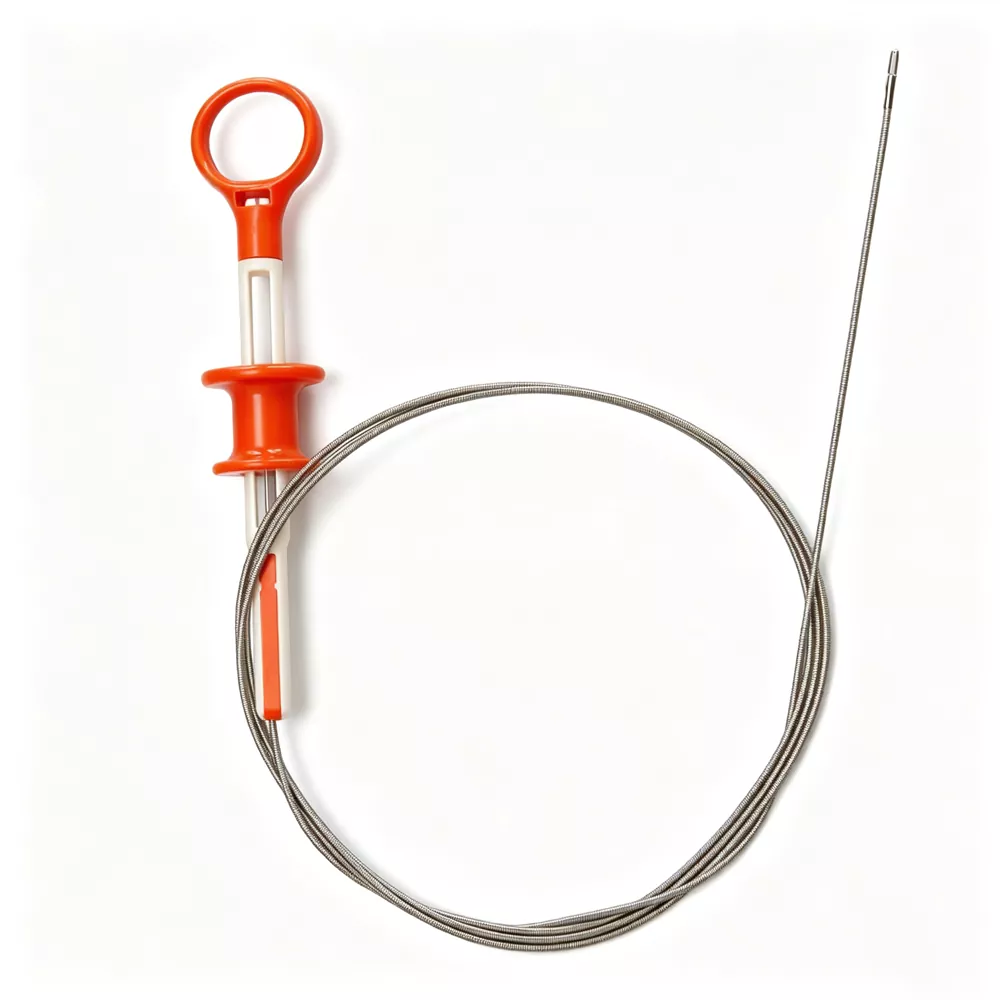
LucentMed is a manufacturer and supplier of disposable gastroscopy biopsy forceps with over 20 years of experience. Our products are compatible with major flexible endoscope brands and enable precise sampling of the gastric mucosa. We offer samples and customization services; please feel free to contact us for a quote.
Manufactured by LucentMed, these disposable gastroscopy biopsy forceps are made from medical-grade stainless steel using precision machining and laser welding. They feature uniform jaw gripping force and smooth, snag-free operation, with rounded jaw edges designed to prevent damage to healthy tissue.
They are EO-sterilized, individually packaged in sterile dialysis paper, and available in customizable lengths for ease of use.
What Are The Components of Disposable Gastroscopy Biopsy Forceps?
1. Distal Forceps Head
This is the miniature metal jaw located at the very tip of the instrument, made of medical-grade stainless steel.
Depending on clinical requirements, the forceps head comes in various designs:
● Standard Oval Cup: The most common oval, cup-shaped head; its sharp edges allow for clean tissue excision and retention.
● With Needle/Spike: Features a tiny positioning needle in the center of the jaw to anchor the device on smooth or hard mucosa, preventing slippage during sampling.
● Alligator Cup: Features serrated edges for superior mechanical gripping force, making it suitable for grasping tougher or harder pathological tissue.
2. Ultra-fine Catheter Sheath
A slender, flexible spring-coil tube connecting the handle to the forceps head. Its surface features an ultra-smooth medical-grade PTFE coating, allowing it to pass smoothly and freely through the narrow biopsy channel of the gastroscope.
3. Ergonomic Handle
The handle used by the endoscopy nurse or physician for external operation.
By sliding the control mechanism back and forth, an internal high-tensile steel wire remotely controls the opening and closing of the distal forceps head inside the patient's body.
Product Specifications
Item
Specifications
Scope of Application
Designed for endoscopic tissue biopsy sampling
Jaw Style
Cup-jaw or Alligator-jaw type
Working Length
1600mm / 2300mm (customizable)
Channel Compatibility
Compatible with ≥2.0mm / ≥2.8mm endoscope channels
Hose Material
Medical-grade plastic-coated spring sheath; flexible and smooth
Control Method
Push-pull handle; operable with one hand
Packaging
Individually packaged
Usage Type
Disposable; prevents cross-infection
Product Advantages
1. Single-use: These disposable gastroscopy biopsy forceps are EO-sterilized and individually sterile-packaged to eliminate the risk of cross-infection.
2. Smooth advancement: The spring sheath features a PTFE coating, ensuring minimal resistance when navigating curved sections and providing a smooth tactile feel during operation.
3. Precise biting: The jaws are laser-welded and offer a wide opening angle, achieving a sampling success rate of ≥98%.
4. Broad compatibility: Compatible with major brands of gastroscopes, colonoscopes, and bronchoscopes, including Olympus, Pentax, and Fujifilm.
Primary Clinical Applications
1. Early screening for gastric/esophageal cancer: Collection of tissue samples for pathological analysis upon detection of suspicious malignant ulcers, elevated lesions, or mucosal discoloration.
2. Characterization of gastric polyps: Sampling of polyp tissue prior to or during resection to determine whether the polyp is adenomatous (a precancerous lesion) or hyperplastic.
3. Classification of chronic gastritis and Helicobacter pylori testing: Collection of mucosal samples from the gastric antrum and body to assess the severity of atrophy and intestinal metaplasia, and to perform rapid urease testing for Helicobacter pylori (Hp).
What Precautions Should Be Taken When Using Disposable Gastroscopy Biopsy Forceps?
1. Maintain a straight alignment during insertion
When passing the disposable gastroscopy biopsy forceps through the biopsy channel, the physician should keep the gastroscope shaft as straight as possible to avoid extreme bending.
2. Open the jaws only after the tip is visible
While the biopsy forceps are being advanced through the channel, the distal jaws must remain completely closed.
The assistant should operate the handle to open the jaws only after confirming—under direct endoscopic visualization—that the tip of the forceps has fully emerged from the distal end of the gastroscope.
3. Strictly follow the three-step sampling method
Step 1: Precisely align the open jaws with the target lesion; for smooth lesions, using forceps with a positioning needle is recommended to prevent slippage.
Step 2: Gently advance the forceps toward the tissue so that the biopsy cups create a slight indentation on the tissue surface.
Step 3: Close the handle quickly and firmly; ensure a clean, decisive action—perpendicular to the mucosa—to excise and retract the tissue, strictly avoiding forceful pulling or jagged tearing.
FAQ
Q1: What are Disposable Gastroscopy Biopsy Forceps?
A: Disposable Gastroscopy Biopsy Forceps are sterile medical instruments designed to be inserted through the working channel of a gastroscope into the digestive tract. They are used to collect tissue samples, retrieve foreign bodies, or remove polyps. They are intended for single use only and cannot be resterilized or reused.
Q2: Can Disposable Gastroscopy Biopsy Forceps be used with a duodenoscope (for ERCP)?
A: Mixed use is not recommended. Although the operating principles are similar, biopsy forceps used for ERCP typically require greater rigidity and specialized tip designs to accommodate side-viewing endoscopes and the specific requirements of navigating the biliary and pancreatic ducts.
Models specifically designated for ERCP should be used.
Q3: What should be done if the biopsy forceps break during use?
A: This constitutes a serious medical device adverse event. First, ensure that the broken fragment has not detached and fallen into the patient's body; if necessary, retrieve the fragment using foreign body forceps.
We use cookies to offer you a better browsing experience, analyze site traffic and personalize content. By using this site, you agree to our use of cookies.Privacy Policy