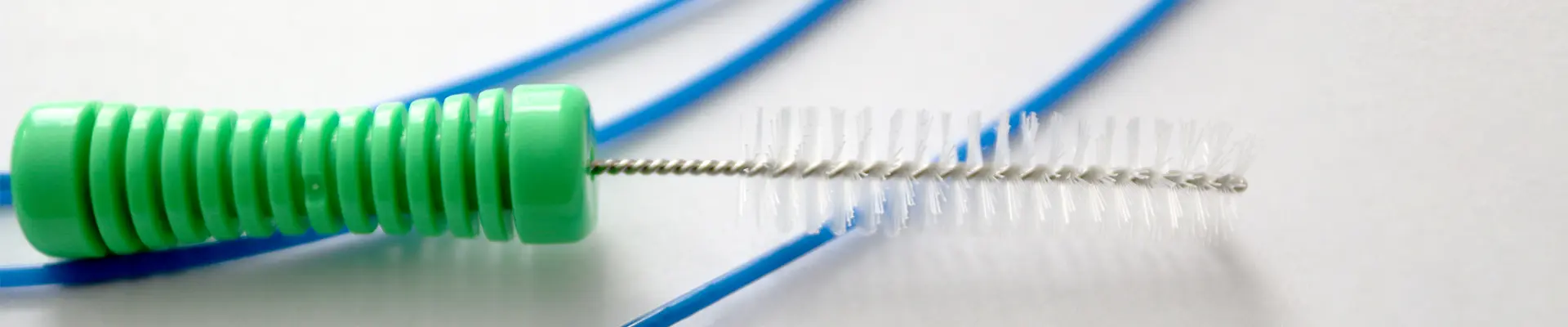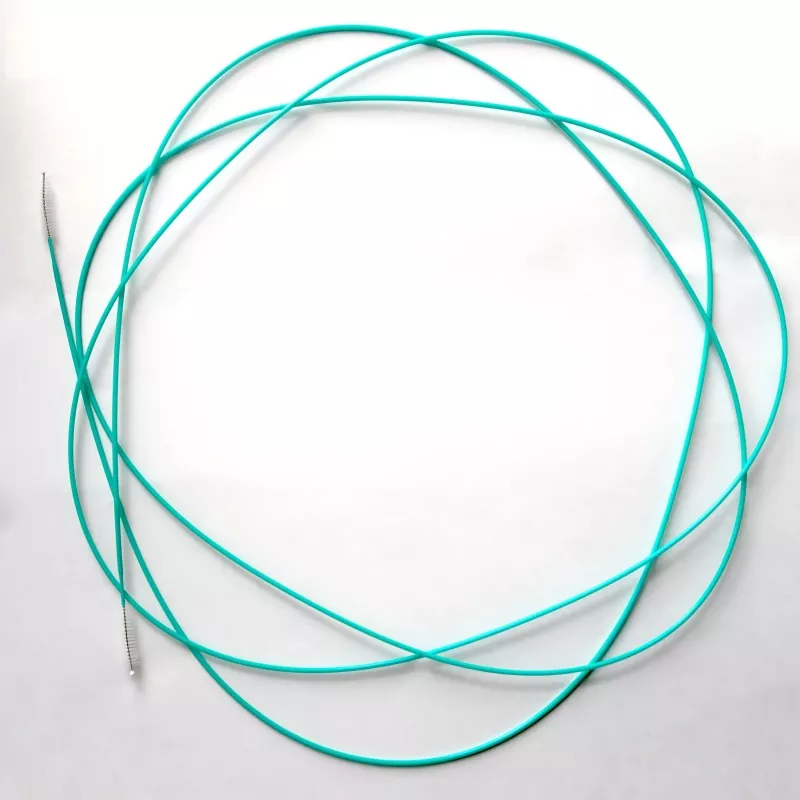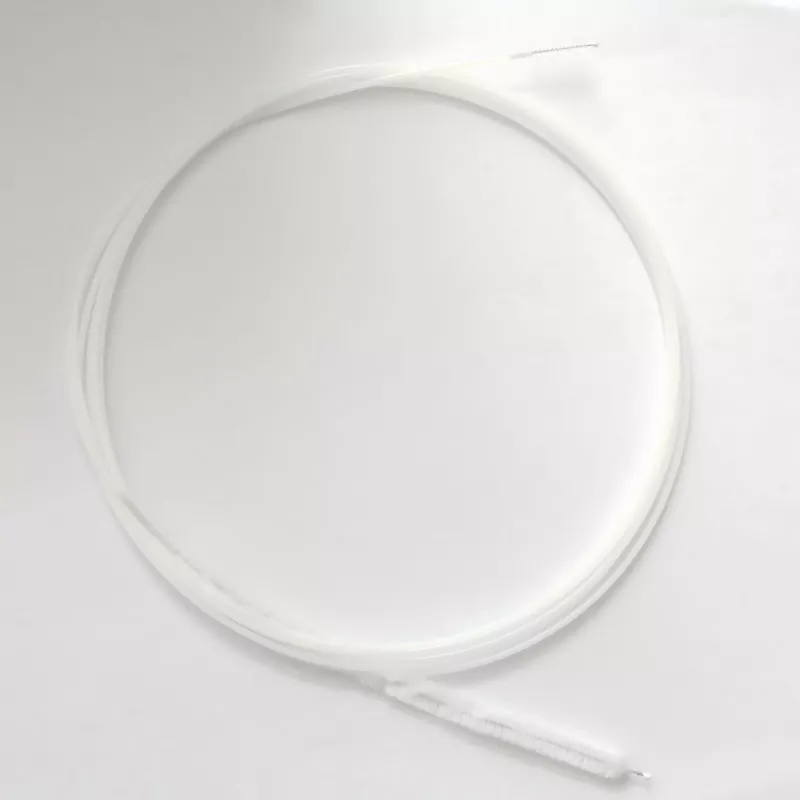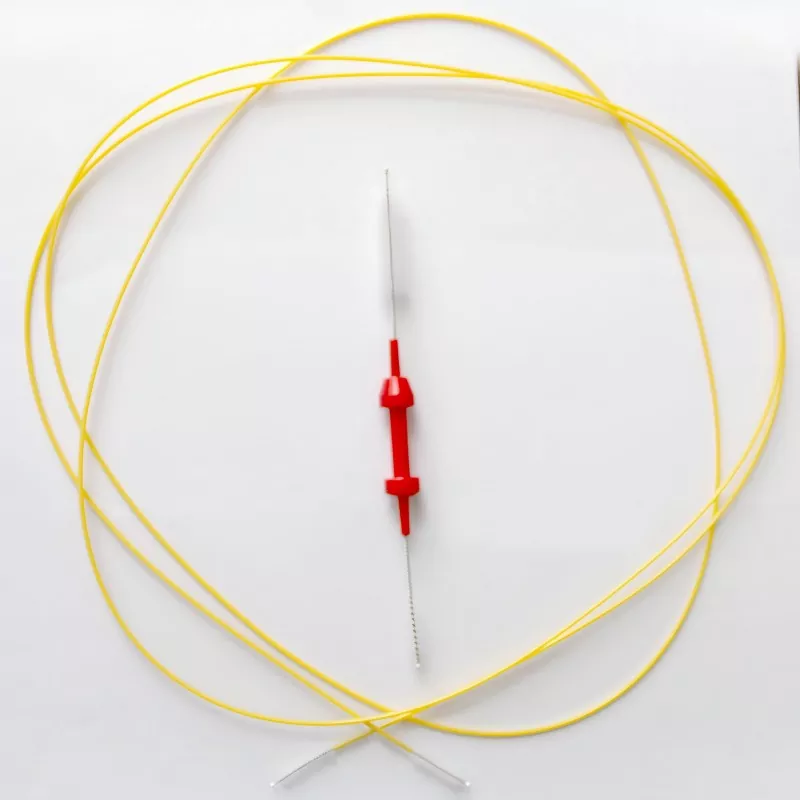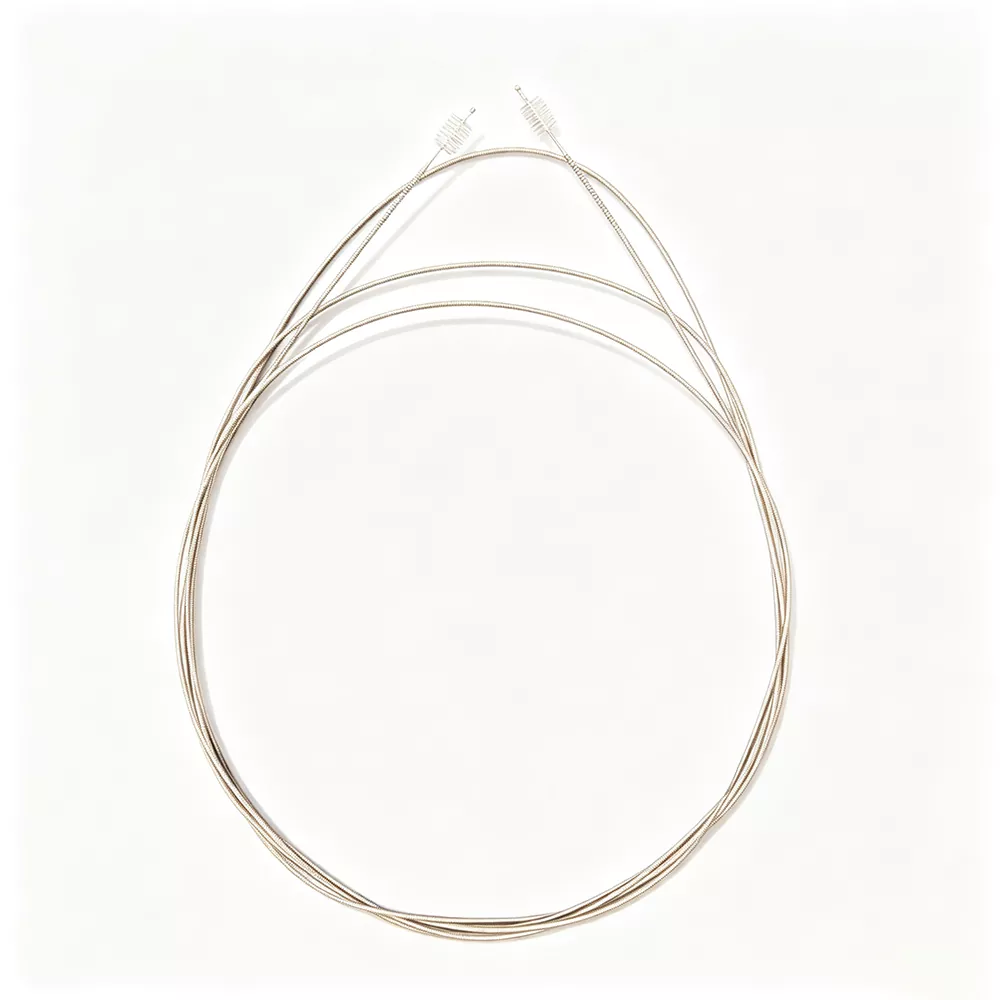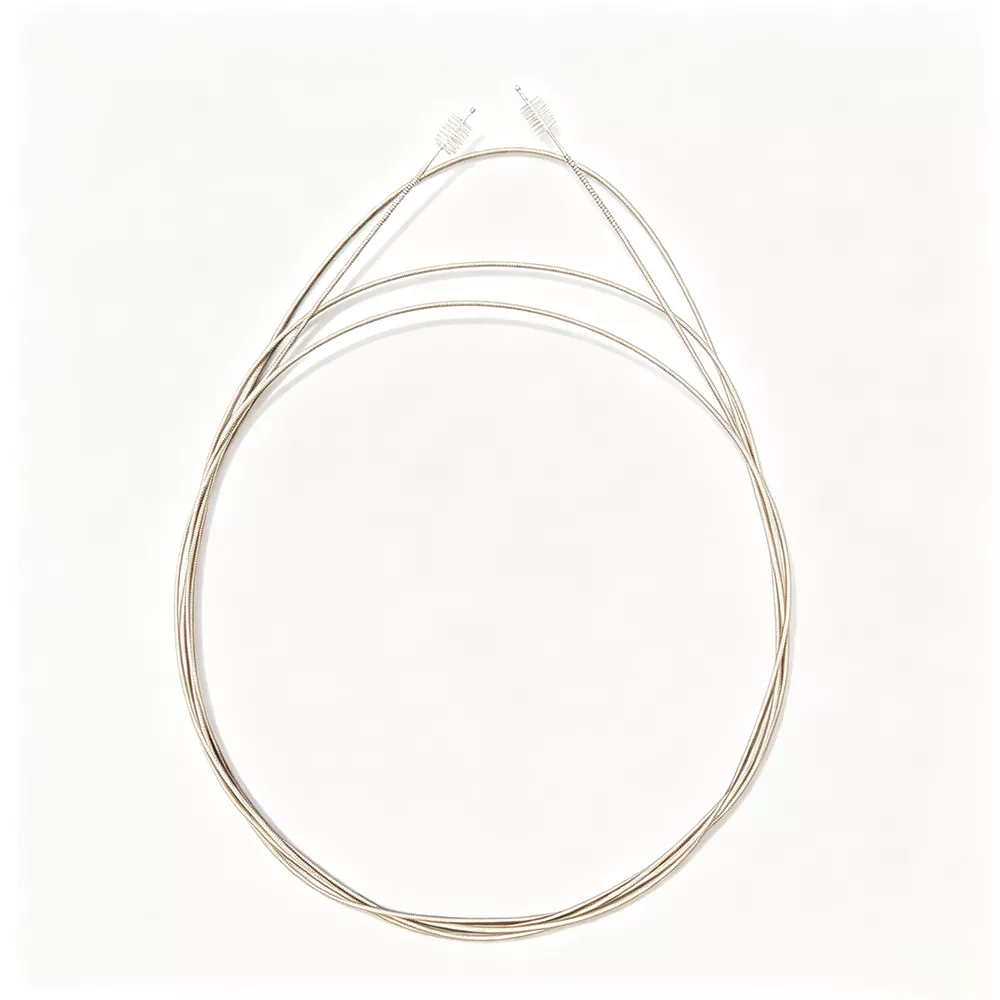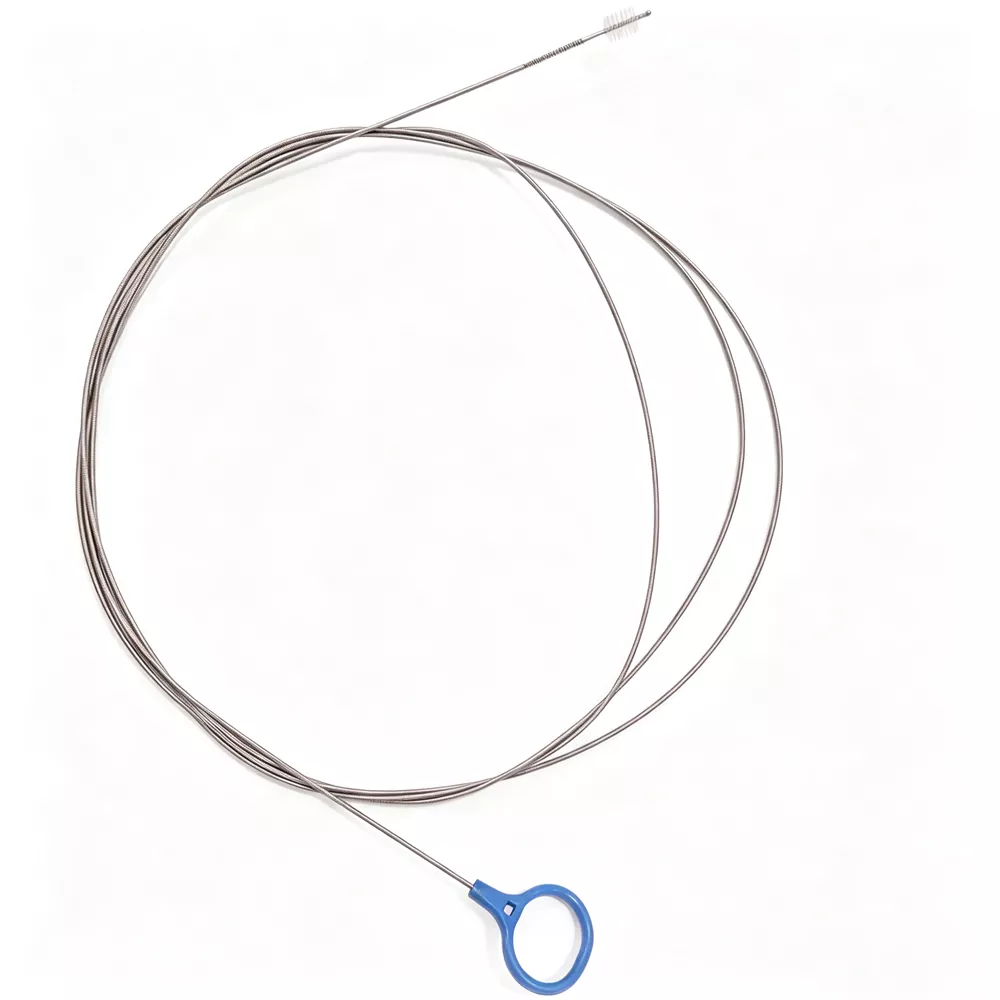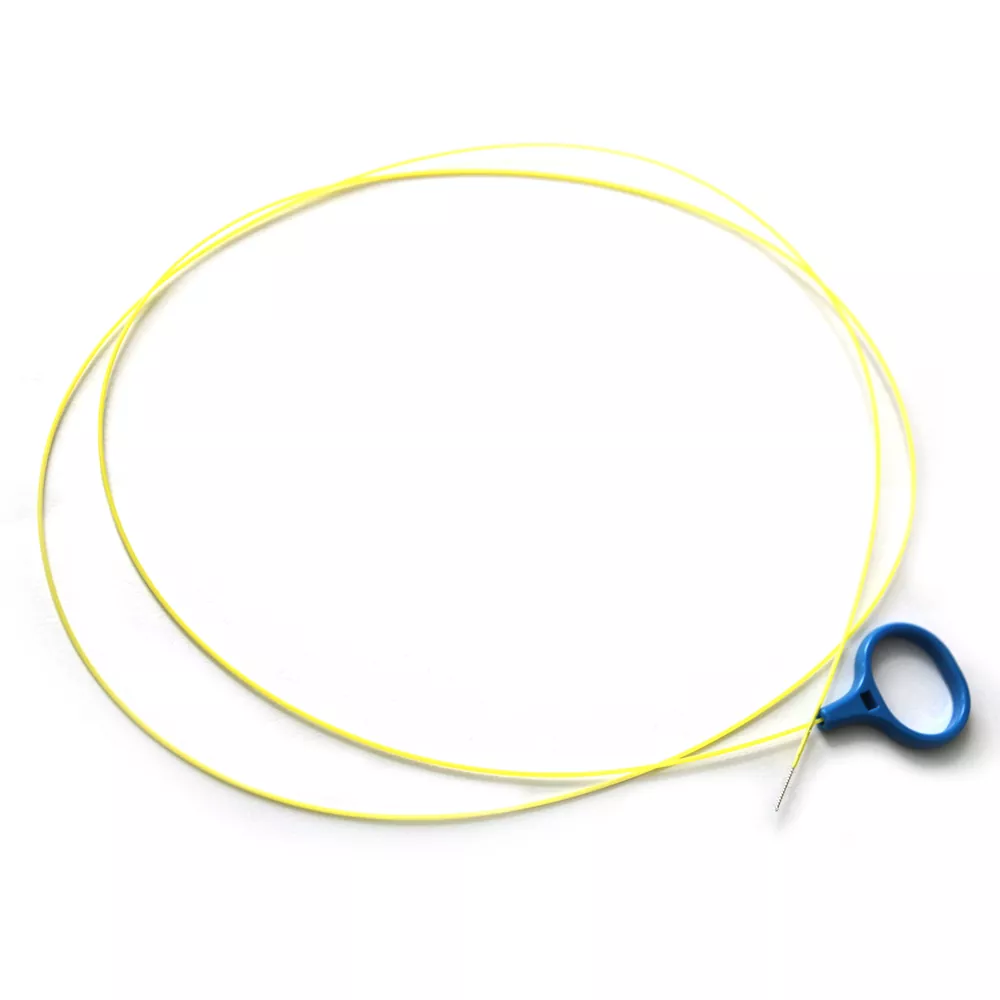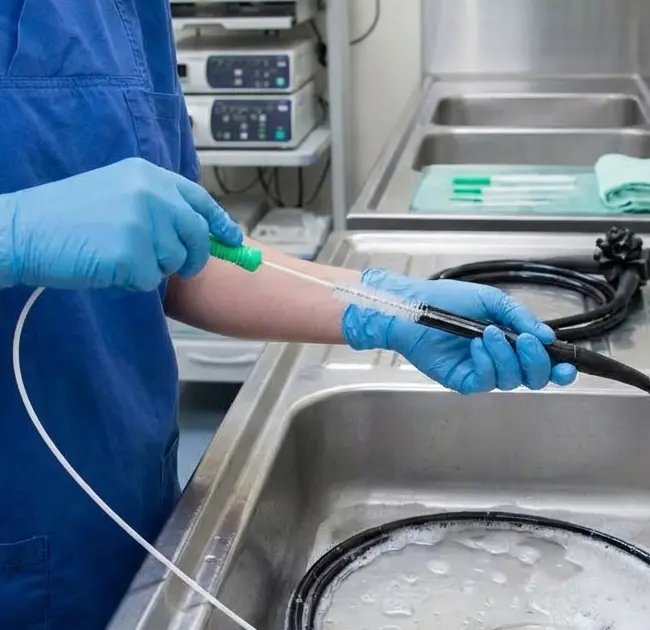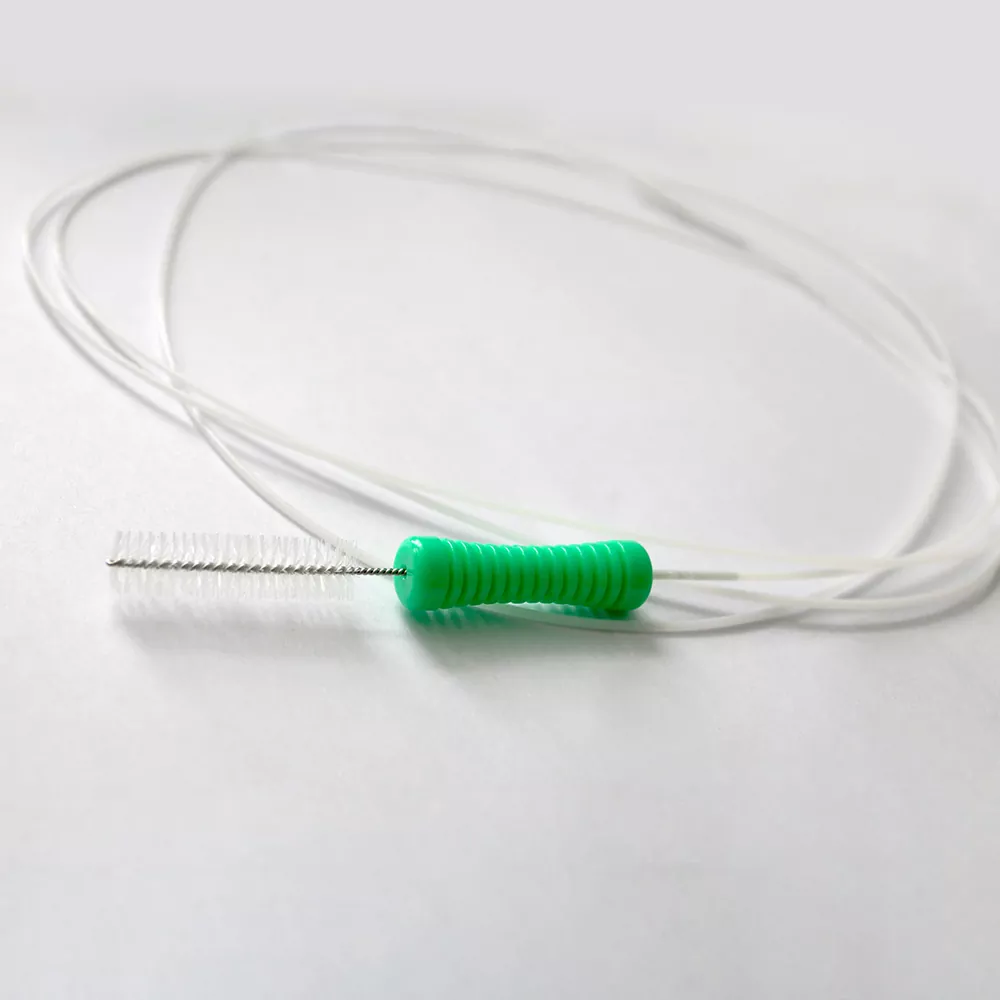
LucentMed offers reusable single-ended endoscope cleaning brushes. With extensive industry experience dating back to 2004, we ensure verifiable manufacturing processes and traceable quality control; our brushes feature rounded tips, are reusable up to 50 times, and do not damage endoscopes.
As a primary manufacturer with four production facilities, LucentMed produces reusable single-ended endoscope cleaning brushes using a specialized bristle-anchoring technique that prevents matting or flattening. This method allows for a higher density of bristles per unit area, ensuring they remain upright and resistant to bending, thereby maintaining their elasticity and durability.
Design Features
1. Single-Ended Design
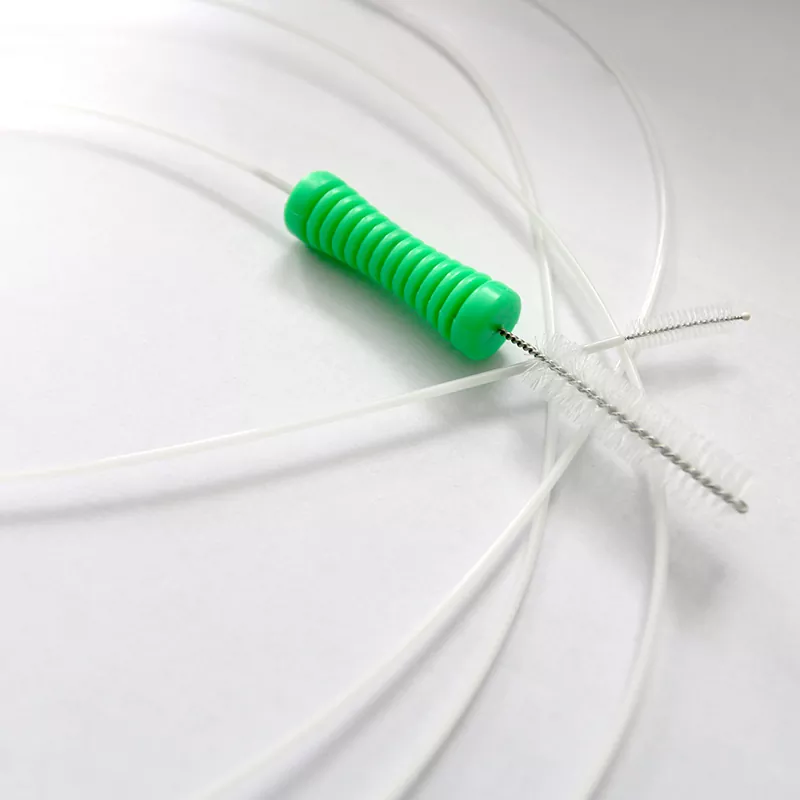
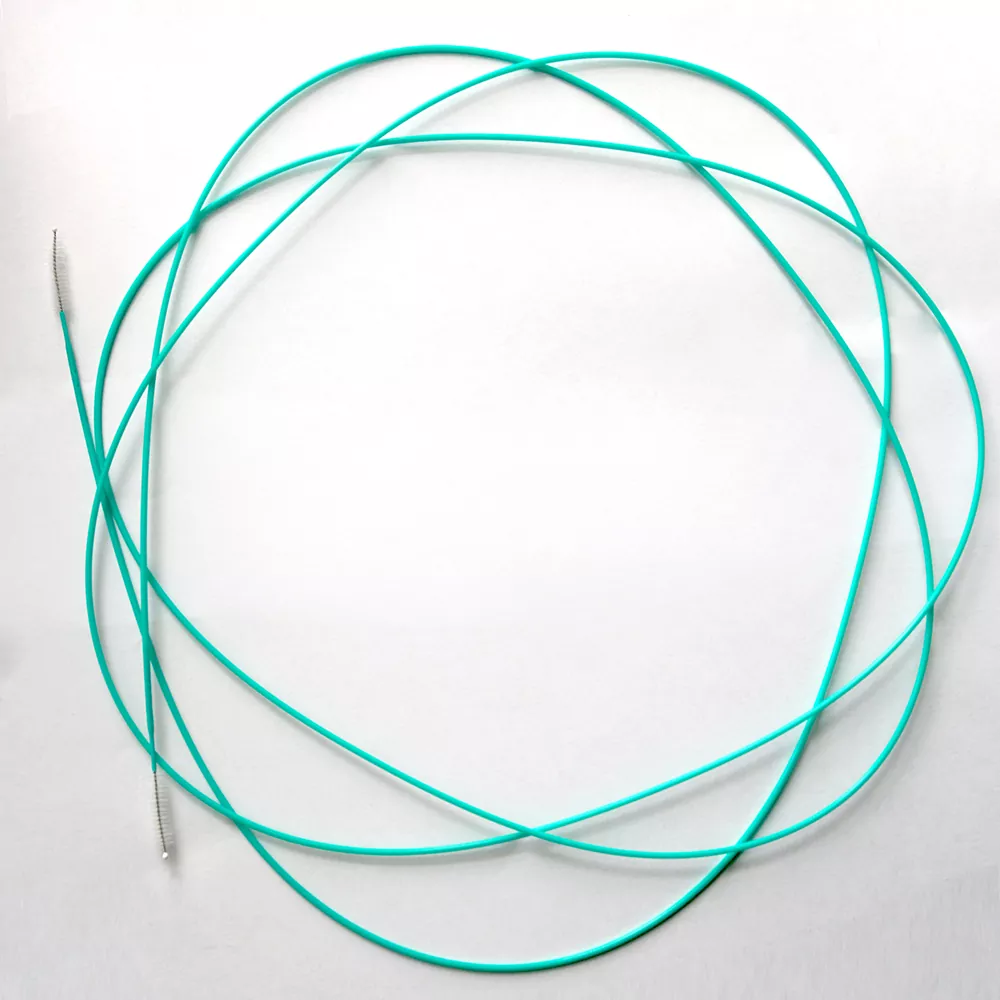
The brush features a long, slender guide wire with bristles at one end and a handle or loop at the other, facilitating easy gripping and the application of force by the operator.
2. Durable, Medical-Grade Materials
To withstand repeated hospital cleaning and sterilization cycles, the brush is constructed from high-quality, resilient materials:
● Guide Wire: Made from premium medical-grade stainless steel, offering exceptional resistance to breakage.
● Bristles: Made from medical-grade nylon that is highly heat-resistant and resilient; the bristles retain their shape and do not easily flatten or deform, even after repeated scrubbing and high-temperature handling.
3. High-Temperature and High-Pressure Resistance
A key feature of this reusable brush is its ability to withstand the conditions found in Central Sterile Supply Departments (CSSD), including high-pressure steam sterilization at 134°C or high-level chemical disinfection, ensuring sterility for subsequent use.
Reusable Single-Ended vs. Double-Ended Endoscope Cleaning Brushes: What's the Difference?
Item
Single-Ended
Double-Ended
Structure
Single brush head
Dual brush heads
Usage Method
Unidirectional operation
Dual-ended
Adaptability
Single specification
Multiple specifications
Operational Complexity
Low
Medium
Efficiency
Medium
Higher
SKU Management
Multiple
Low
Applicable Scenarios
Fixed equipment department
Multi-device mixed-use environments
Cost Logic
Lower cost per unit
Better overall performance
How Should a Reusable Single-Ended Endoscope Cleaning Brush Be Disinfected and Sterilized?
I. Mechanical Cleaning and Decontamination
1. Manual Pre-cleaning
Immediately after use, rinse the reusable single-ended endoscope cleaning brush under running water. Use your hands or a specialized wiping cloth to loosen and remove large debris, moving in the direction of the bristles.
2. Multi-enzyme Soaking
Completely submerge the cleaning brush in a prepared multi-enzyme cleaning solution to break down residual proteins, fats, and mucus.
3. Ultrasonic Cleaning
Coil the brush and place it in an ultrasonic cleaner for agitation cleaning; this removes microscopic debris from the base of the bristles and tiny crevices in the wire—areas inaccessible to manual brushing.
4. Rinsing and Drying
Thoroughly rinse off residual enzyme solution using purified water. Subsequently, dry the brush using a compressed air gun or place it in a drying cabinet until completely dry.
Instruments must not be sterilized while wet.
II. Sterilization Methods
Coil the dried cleaning brush and seal it inside a dedicated medical sterilization pouch. The following sterilization methods may be used:
1. Steam Sterilization (Autoclaving)
Reusable single-ended brushes are highly heat-resistant and can withstand autoclave temperatures.
Standard parameters: 134°C for 4–10 minutes, or 121°C for 20–30 minutes.
If the department's steam sterilization schedule is full, or if rapid turnaround is required, this low-temperature sterilization method may be used. It utilizes vaporized hydrogen peroxide to penetrate the packaging and eliminate all microorganisms and spores.
3. High-Level Chemical Disinfection
For primary care clinics that lack a Central Sterile Supply Department (CSSD) and an autoclave, high-level chemical disinfection is mandatory:
Completely submerge the cleaned and dried brush in a disinfectant that meets national standards. After soaking for the prescribed duration, thoroughly rinse the surface with sterile water to remove any residual toxic chemical agents; dry the item under aseptic conditions and store it in a sterile, sealed container for future use.
Commonly used agents include 2% glutaraldehyde, ortho-phthalaldehyde (OPA), or peracetic acid.
FAQ
Q1: How many times can a reusable single-ended brush be used? When should it be replaced?
A: Replace the brush immediately if any of the following occur:
① The bristles are noticeably flattened, sparse, or show more than three split ends;
② The connection between the brush head and the shaft becomes loose;
③ The shaft shows signs of rust or the outer coating is damaged;
④ The recommended maximum number of uses has been reached.
Q2: What quality documentation is provided for reusable single-ended brushes?
A: LucentMed provides the following documentation with every shipment:
① Pull-off force test report (actual measurement ≥15N);
② Material certification (bristles, shaft, TPU);
③ Factory inspection report.
Additionally, ISO 13485 certification and Class I medical device registration certificates are available upon request.
Q3: Where can I purchase high-quality reusable single-ended endoscope cleaning brushes? How do I request samples?
A: LucentMed is the original manufacturer and supplies products directly. You can contact our sales team via our official website, by phone, or by email.
Free Sample Policy: New customers can request 2–5 samples. A specification confirmation form is included with the shipment; upon receipt, you can evaluate the cleaning performance, passability, and handling feel before proceeding with bulk orders.
Bulk order support includes framework agreements, tiered pricing, and inventory management services.
We use cookies to offer you a better browsing experience, analyze site traffic and personalize content. By using this site, you agree to our use of cookies.Privacy Policy