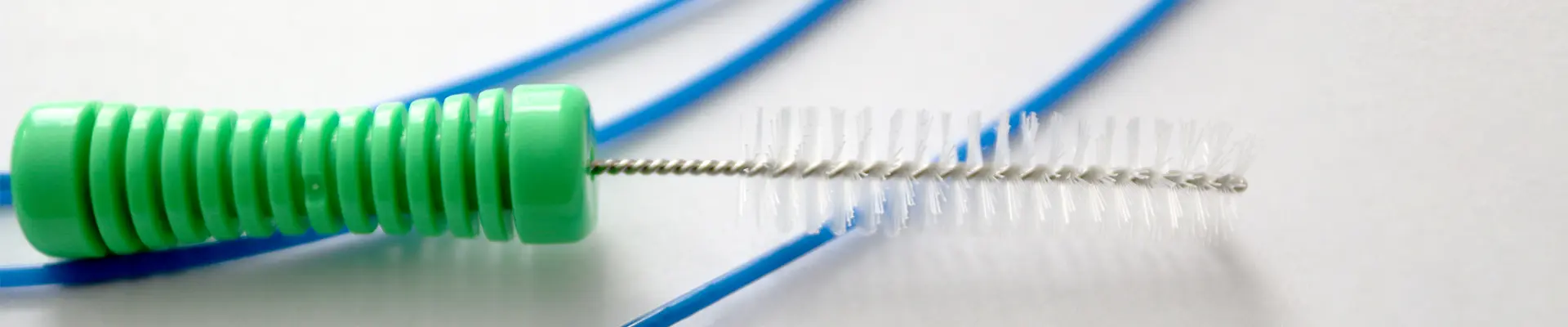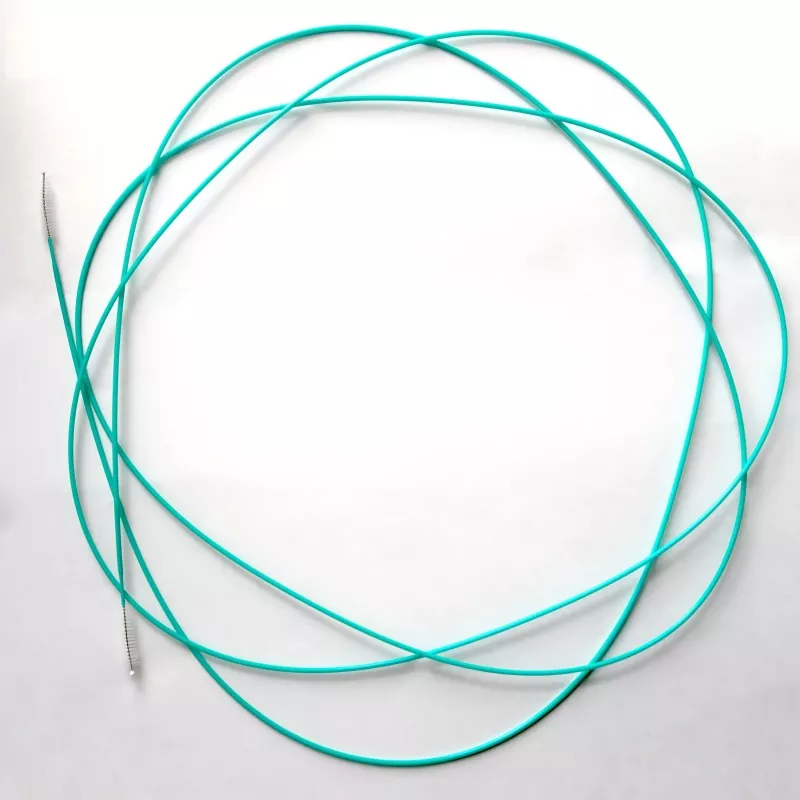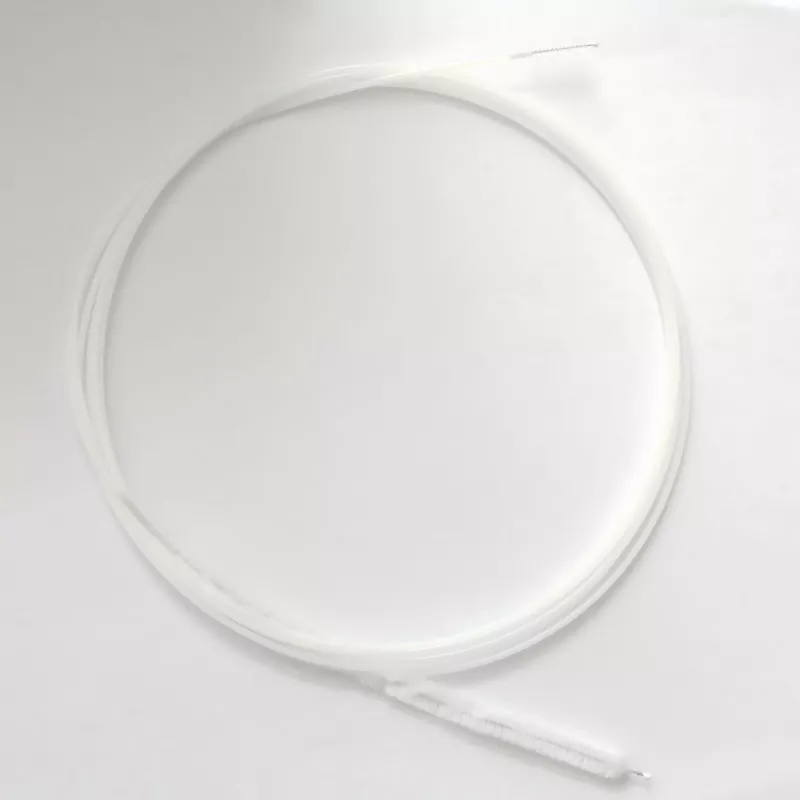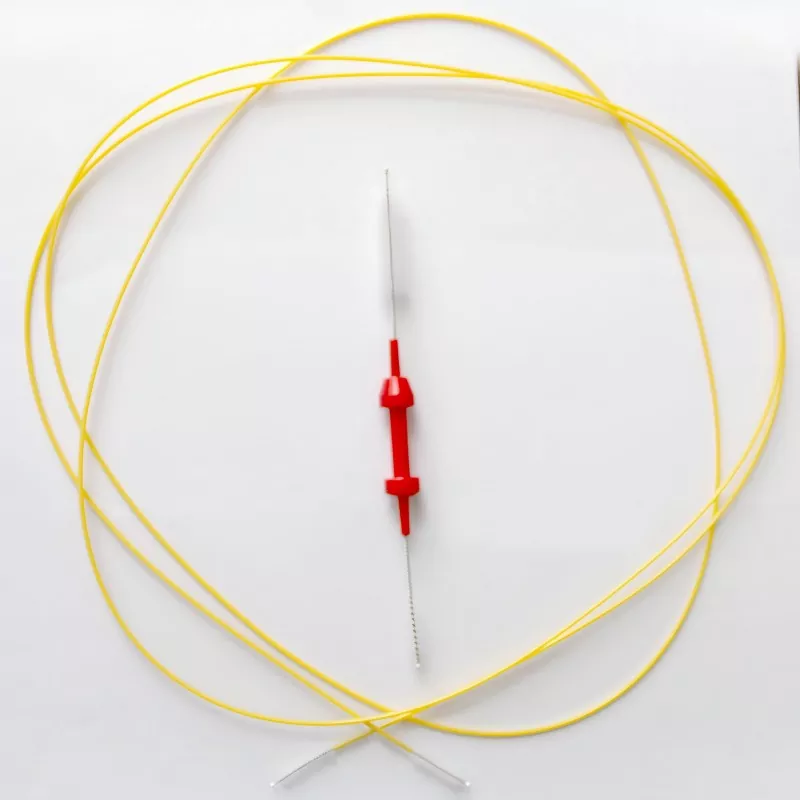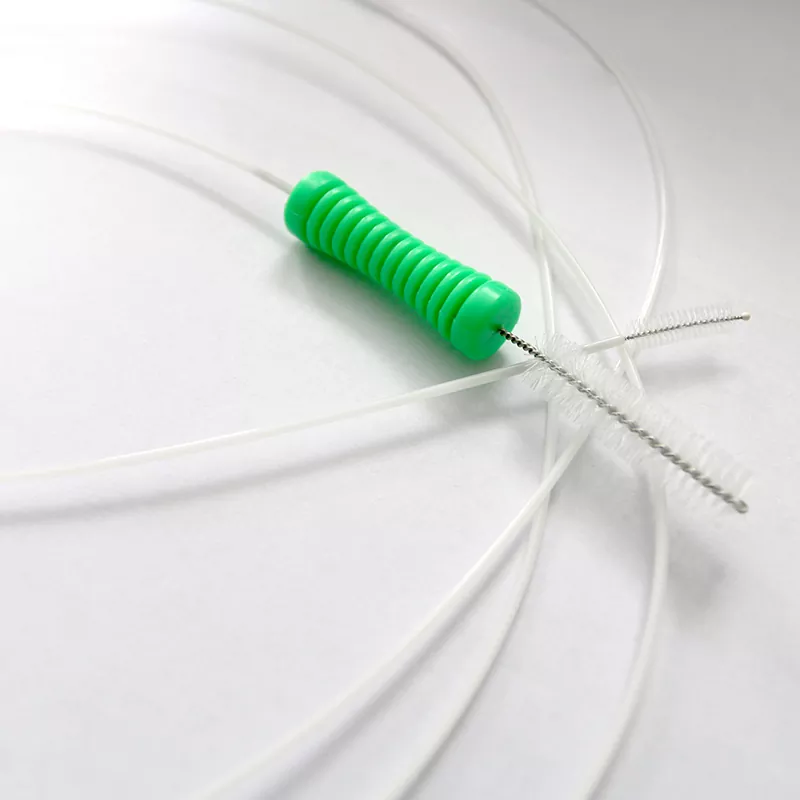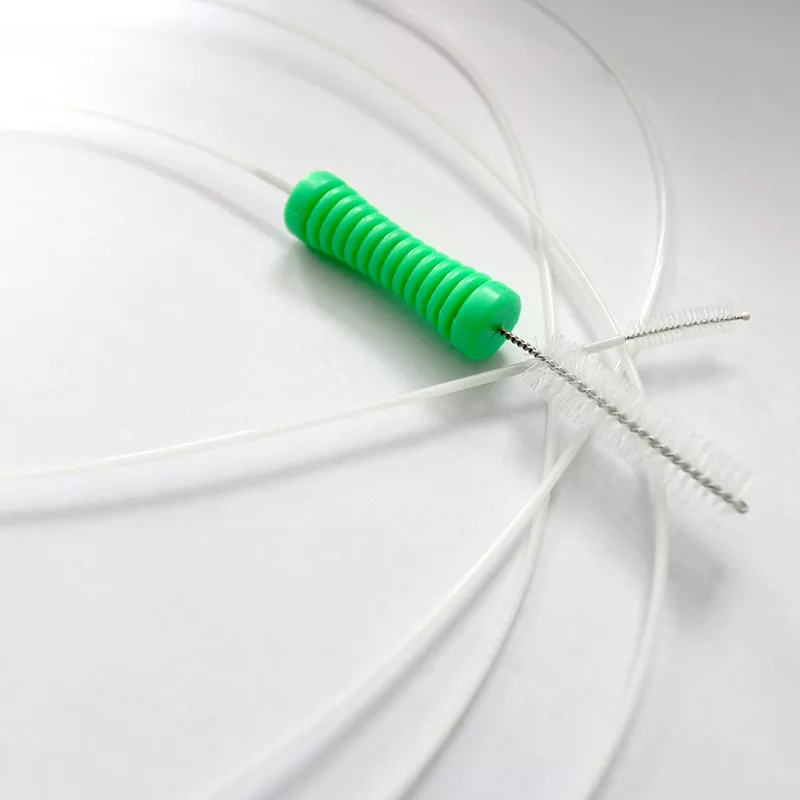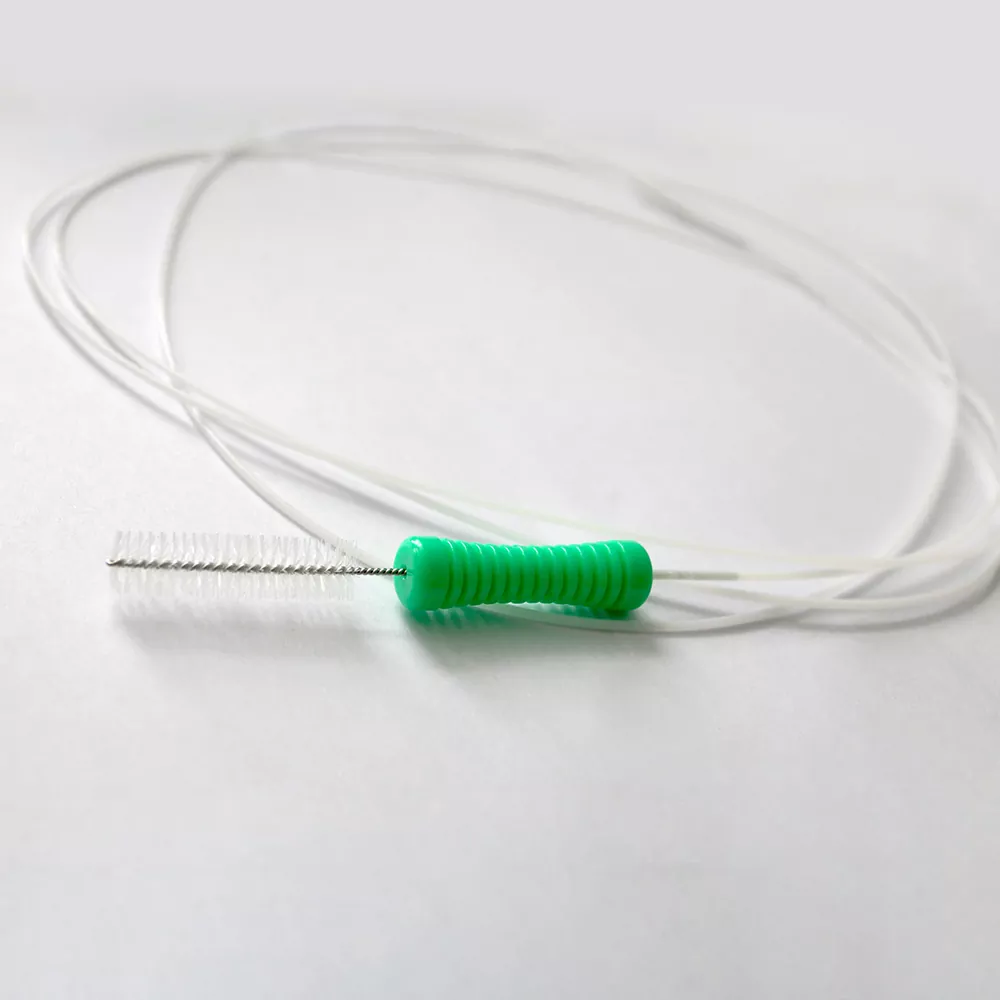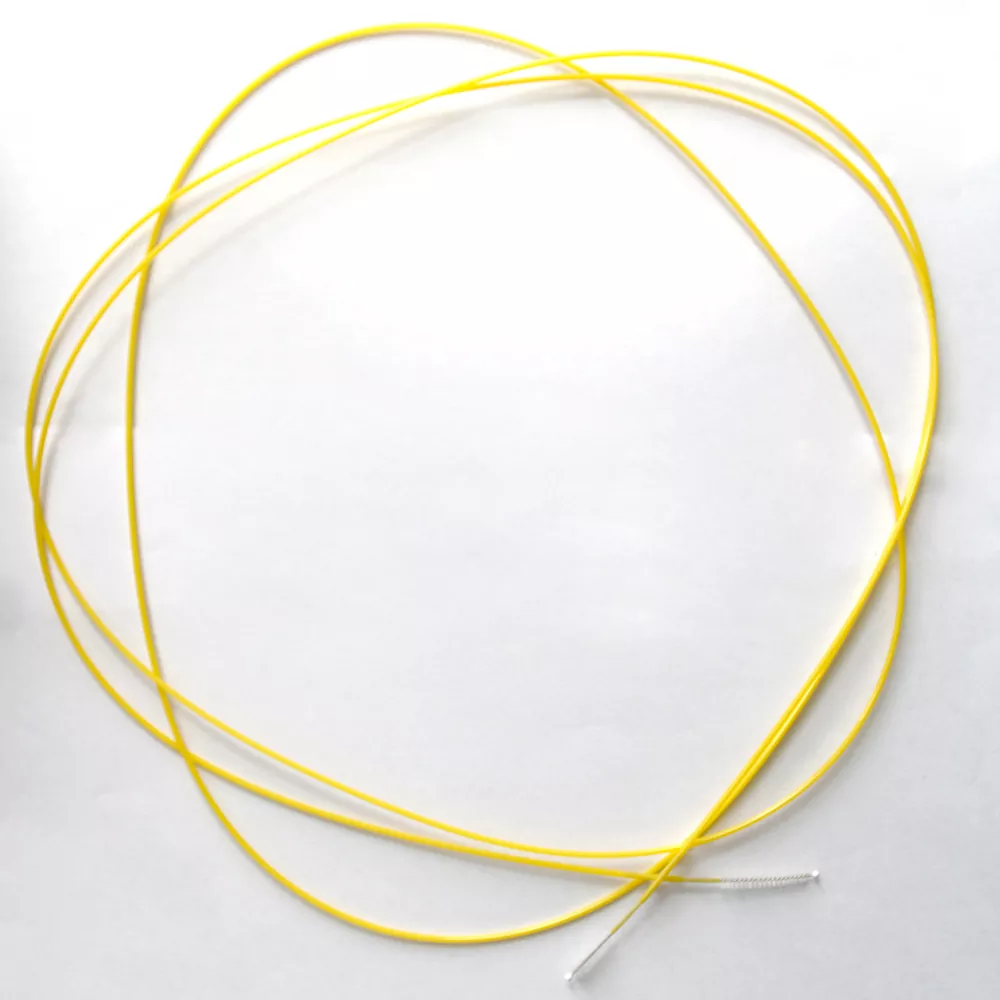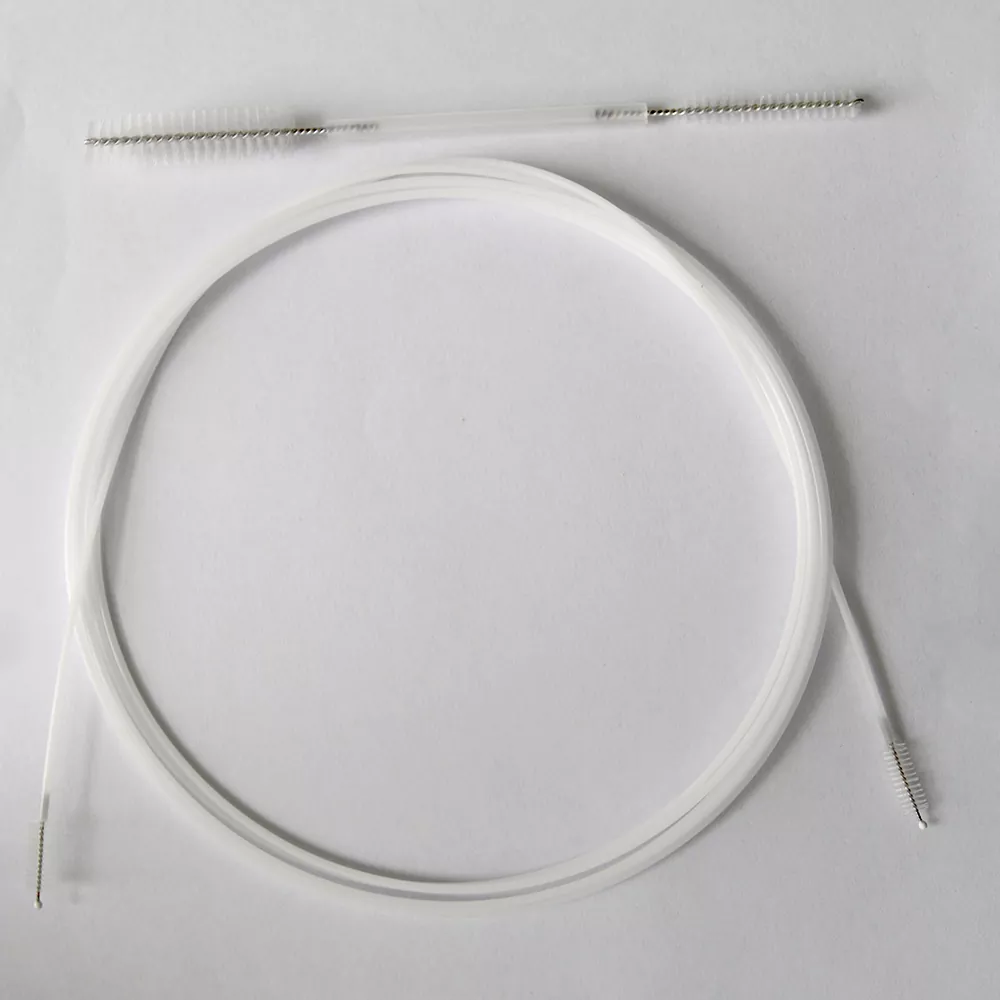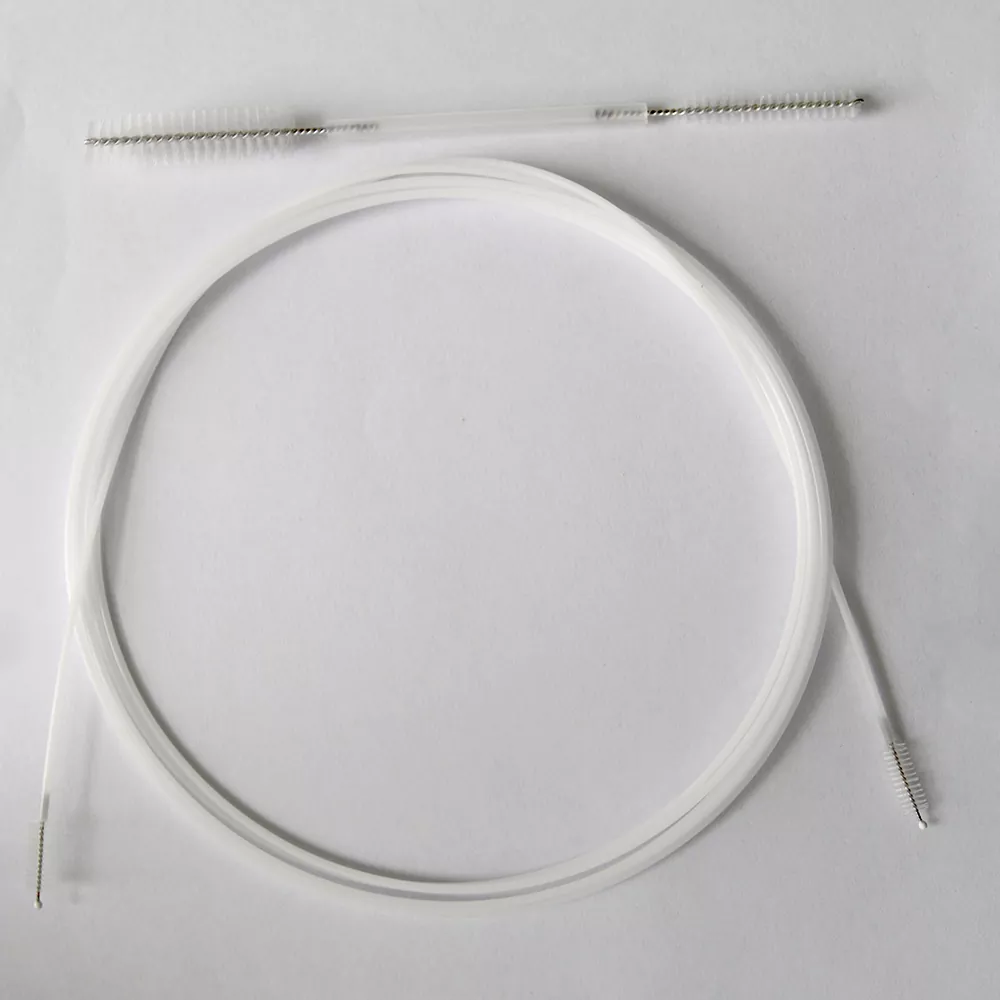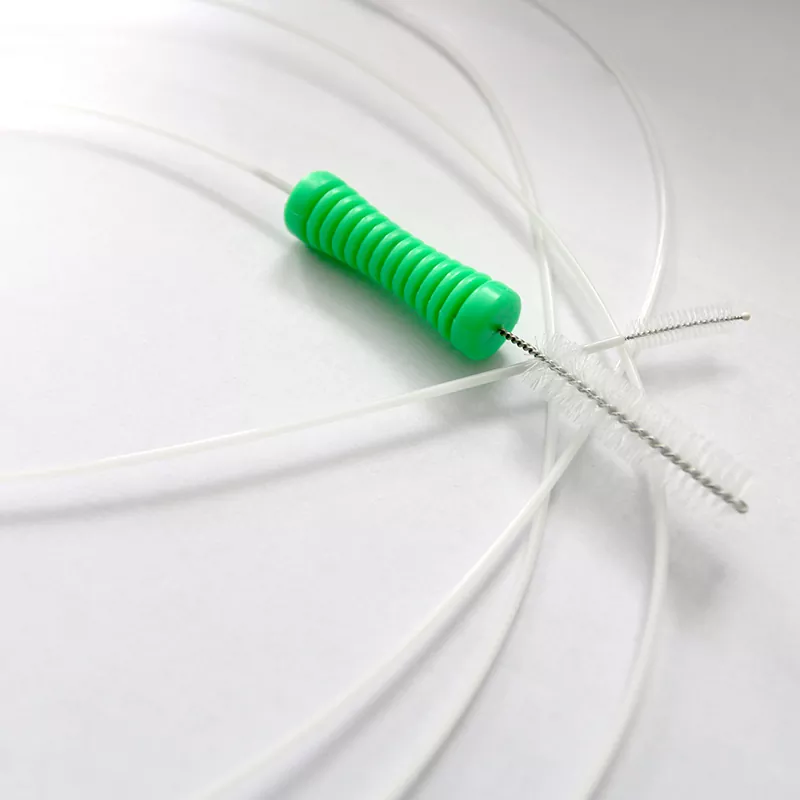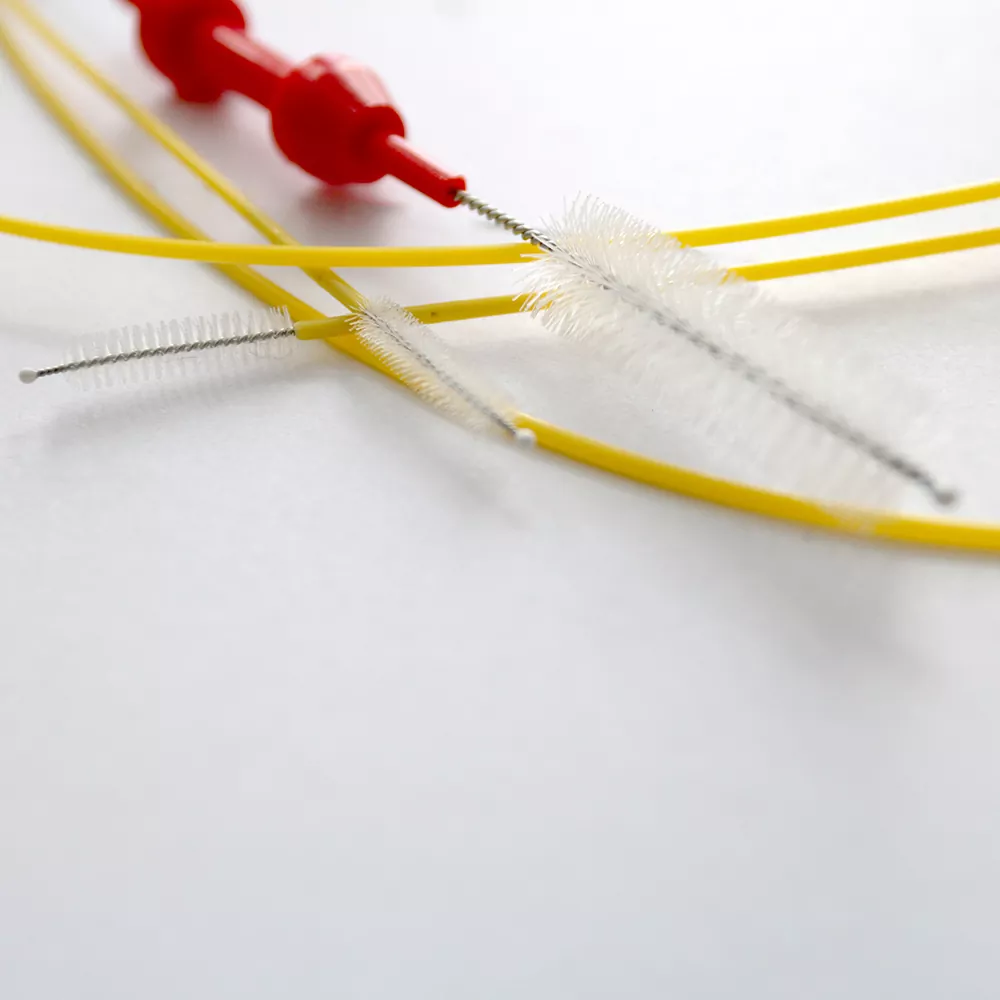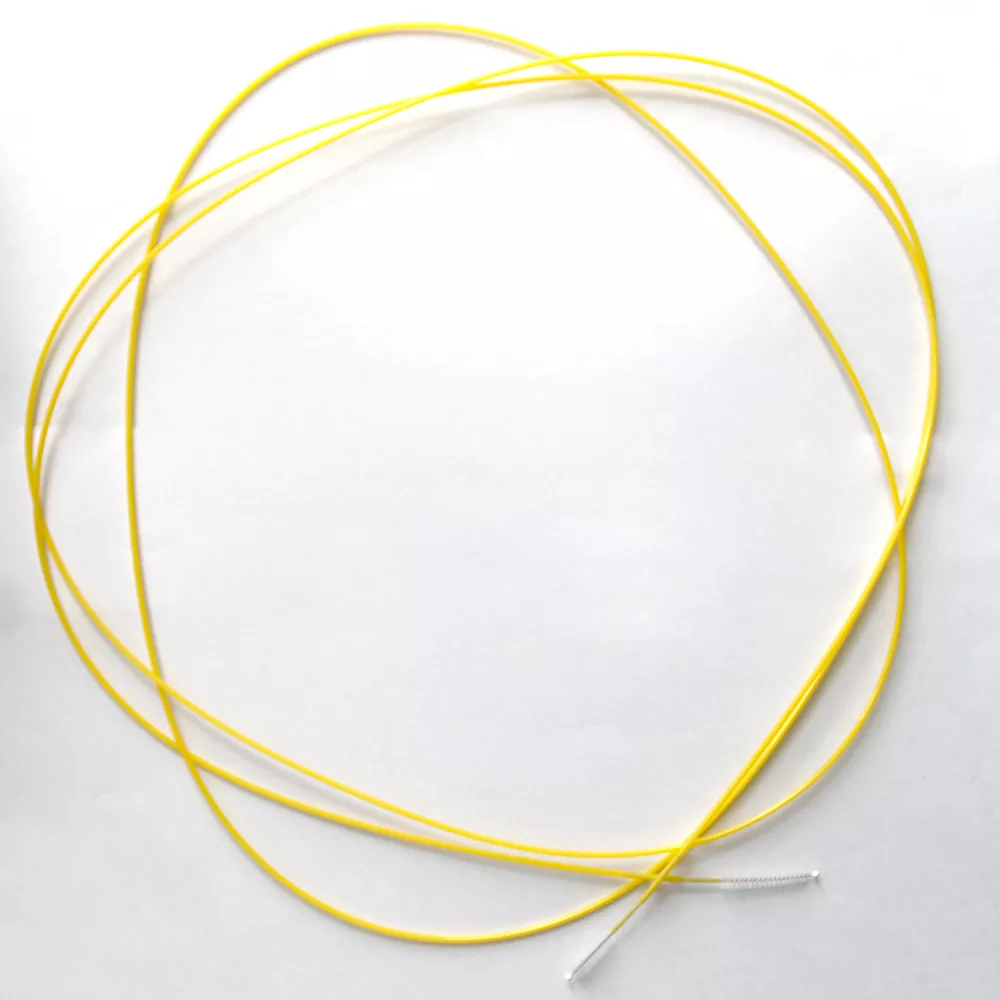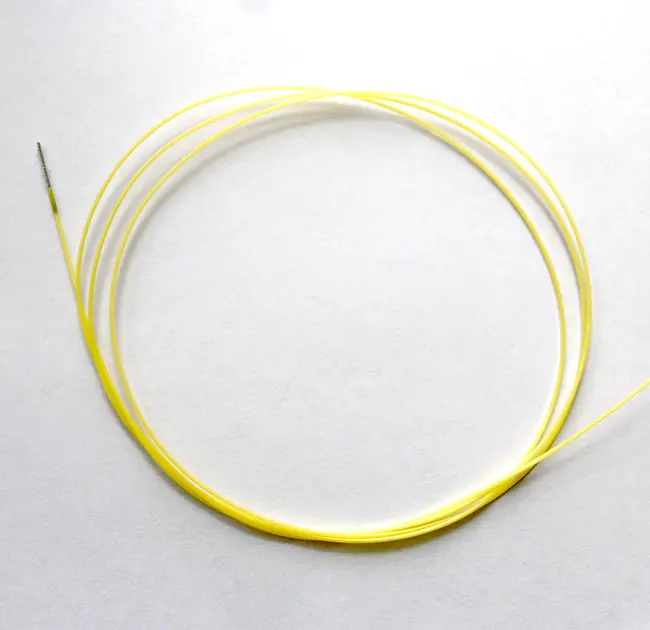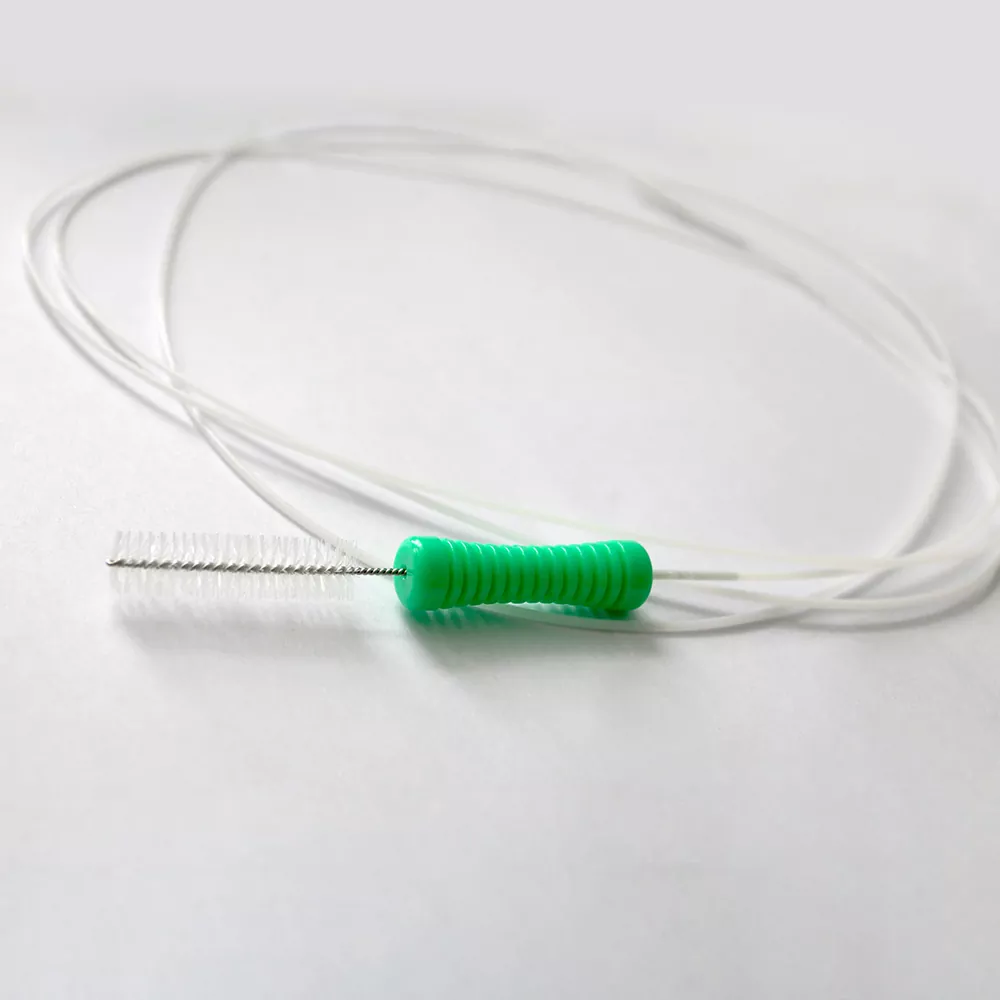
As a reliable manufacturer and supplier of disposable endoscopic cleaning brushes, LucentMed produces ENT endoscope brushes featuring one-piece molded construction, medical-grade nylon bristles, and rounded tips. We hold ISO 13485, ISO 9001, and CE certifications, and offer free trial samples as well as one-stop customization services.
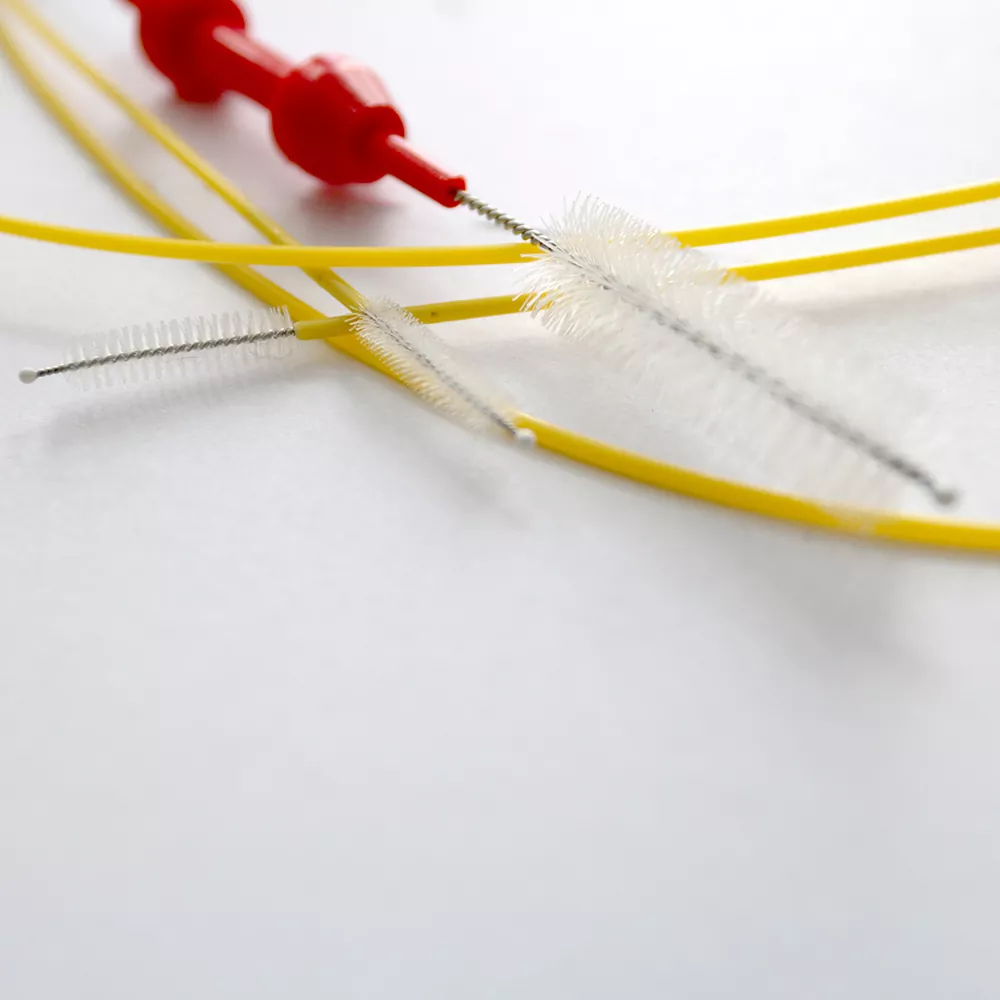
The ENT Endoscope Brush is one of the products offered by LucentMed. As a professional manufacturer, we construct the brush using durable stainless steel, while the brush head features rotatable nylon bristles.
Its design allows it to navigate sharp bends and narrow channels, enabling comprehensive and efficient cleaning of complex internal pathways.
Key Features
1. Ultra-fine Diameter
The brush head and guidewire of the ENT Endoscope Brush are extremely slender, with a brush diameter typically ranging from 1.0 to 2.5 mm, allowing for easy entry into the tiny channels of nasopharyngoscopes or otological suction tubes.
2. Exceptional Flexibility
The brush shaft (guidewire) is made of high-grade stainless steel spring wire; it provides sufficient pushability while remaining flexible enough to bend freely within tortuous, narrow channels without breaking.
3. Protective Tip Design
The distal end of the brush features a smooth plastic protective ball or a bonded protective tip, ensuring that the inner walls of expensive endoscope channels are not scratched during advancement.
What Does an ENT Endoscope Brush Primarily Clean?
1. Key areas for cleaning
● Internal channels of endoscopes: Suction and irrigation channels within flexible or rigid nasopharyngoscopes and bronchoscopes.
● Specialized ENT suction tubes: Such as those used for otology or nasal procedures. These narrow metal or plastic tubes cannot be adequately cleaned by standard flushing alone; they require thorough brushing along their entire length with an ENT endoscope brush.
● Crevices in micro-surgical instruments: Hard-to-clean areas—such as joints, pivots, threads, and serrations—on the micro-forceps and scissors used in ENT surgery.
2. Types of debris primarily removed
Through mechanical friction, the ENT brush primarily removes:
● Human secretions: Such as nasal mucus, pus, earwax (cerumen), and pharyngeal mucus.
● Surgical residues: Residual blood, blood clots, dried pus scabs, and tiny tissue fragments.
● Biofilm: Bacterial aggregates adhering to the tube walls. Brushing disrupts this protective layer, ensuring that subsequent disinfectants or sterilization gases can penetrate thoroughly.
Selection Guide
1. Otoscope
Features: Narrowest channel, most intricate structure
Recommended specifications:
Brush head diameter: 0.8–1.5 mm
Working length: 300–800 mm
2. Nasal Endoscope
Features: Medium diameter, longer channel
Recommended specifications:
Brush head diameter: 1.0–2.0 mm
Working length: 500–1200 mm
3. Laryngoscope
Features: Relatively stable channel; high level of contaminants (mucus + blood)
Recommended specifications:
Brush head diameter: 1.5–2.5 mm
Working length: 800–1500 mm
4. Comprehensive ENT Endoscope Systems
Features: Compatible with multiple brands; wide range of specifications
Q: How do I determine when an endoscope brush should be discarded?
A: Mandatory disposal is required if the bristles show significant splitting or deformation in more than three places, or if the brush head becomes loose or the metal shaft shows signs of rust.
LucentMed reusable brushes feature wear-resistant DuPont bristles and come with a usage log; replacement is recommended after 50 uses. Disposable brushes are discarded after a single use, so no assessment is necessary.
Q: Can the same cleaning brush be used for both ear endoscopes and nasopharyngolaryngoscopes?
A: Interchangeable use is not recommended. Ear endoscopes have shorter channels and smaller inner diameters, whereas nasopharyngolaryngoscopes have longer channels and larger inner diameters.
Using the wrong brush may result in an ear endoscope brush being too long and getting stuck, or a nasopharyngolaryngoscope brush being too short to reach the necessary areas.
Q: How should hospitals conduct incoming inspections for ENT endoscope brushes?
A: A "three-check, one-test" approach is recommended:
Check 1: Packaging integrity (inspect individual sterile pouches for damage or air leaks);
Check 2: Labeling (verify batch number, expiration date, and color change of the EO indicator strip);
Check 3: Qualifications (confirm the supplier provides ISO 13485 certification and batch test reports);
Test: Randomly sample and test pull-out strength (this can be outsourced to a third party or the supplier can be required to provide actual test data with the shipment).
LucentMed meets all these requirements and can provide the necessary reports and certifications; the company holds ISO 13485, ISO 9001, and CE certifications.
Hot Tags: ENT Endoscope Brush Manufacturer, Endoscope Cleaning Brush Wholesale, Flexible Scope Brush Supplier
We use cookies to offer you a better browsing experience, analyze site traffic and personalize content. By using this site, you agree to our use of cookies.Privacy Policy